How to Lower CYA (Stabilizer)
Cyanuric acid only comes down one real way: dilution. How partial draining and refilling works, when reverse osmosis helps, and why no chemical removes stabilizer from pool water.
If your cyanuric acid (CYA) is too high, here is the honest answer up front: the only reliable way to lower it is dilution. You partially drain the pool and refill with fresh water. There is no chemical that removes CYA the way an increaser raises alkalinity or acid lowers pH. A reverse osmosis service is the one alternative, and it works by filtering CYA out rather than reacting it away. Everything else is wishful thinking.
That sounds blunt, but it is the most useful fact you can know about stabilizer. Once you accept that CYA only comes down by replacing water, you will be far more careful about how it goes up in the first place.
Test Before and After You Dilute

Taylor K-2006C Complete Pool Water Test Kit
$152.98 on Amazon
Accurate CYA reading so you can confirm your starting point and result.
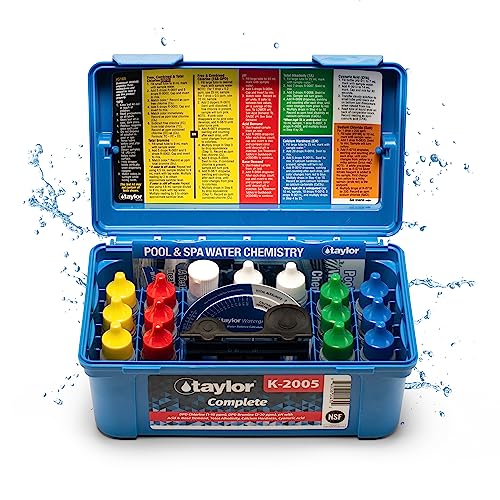
Taylor K-2005 High Range Pool Test Kit
$75.99 on Amazon
Drop kit that reads CYA along with chlorine, pH, alkalinity, and hardness.
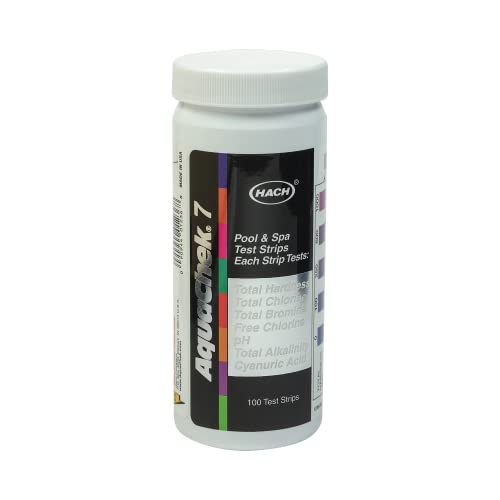
AquaChek 7-Way Pool and Spa Test Strips
$22.49 on Amazon
Quick CYA checks as you drain and refill in stages.

CPDI Champion Liquid Chlorine, 4-Pack
$49.99 on Amazon
Switch to liquid chlorine, which adds no CYA, to stop the climb.
Why high CYA is a problem worth fixing
Cyanuric acid protects chlorine from sunlight, which is good in moderation. But the more CYA you have, the more free chlorine you must carry to keep the water sanitized, because target free chlorine runs about 7.5 percent of your CYA. This is the heart of the FC/CYA relationship. At 40 ppm CYA your target is around 3 ppm FC. At 100 ppm it jumps to roughly 7.5 ppm, and beyond that the chlorine demand becomes hard and costly to satisfy. Pools that turn and stay green despite normal-looking chlorine are very often high-CYA pools.
How dilution works
Dilution is simple in principle: replace high-CYA water with fresh water. CYA drops in proportion to how much water you swap out. If your fill water contains little or no cyanuric acid, replacing half the pool roughly halves your CYA. Replacing a third drops it by about a third.
| Water replaced | Approx. CYA reduction | Example: 100 ppm becomes |
|---|---|---|
| 25% | ~25% | ~75 ppm |
| 33% | ~33% | ~67 ppm |
| 50% | ~50% | ~50 ppm |
These are estimates and assume your refill water is low in CYA, so test your tap or well water if you are unsure. Our CYA calculator helps you estimate the drain percentage needed to reach your target, and the pool volume calculator tells you how many gallons that percentage represents.
Step by step
- Test your current CYA and decide your target, usually 30 to 50 ppm for a chlorine pool or 60 to 80 for a salt pool.
- Calculate the drain percentage with the CYA calculator, then convert to gallons with your pool volume.
- Lower the water to the planned level using a submersible pump or your filter's waste setting. Watch for liner and structural cautions below.
- Refill with fresh water to the normal level.
- Circulate and retest. Run the pump to mix thoroughly, then test CYA again. Repeat in stages if you need a larger reduction.
- Rebalance. Fresh water resets other readings too, so recheck and adjust in order: alkalinity, pH, then chlorine. See pool water balance for the sequence.
Draining cautions
Removing water is not risk-free, so take these seriously:
- Vinyl liners can float or shift if drained too low. Do not fully drain a vinyl pool without professional guidance.
- Inground pools can pop out of the ground from hydrostatic pressure if emptied when the water table is high. Partial draining is the safe approach.
- Drain in stages for big reductions rather than emptying most of the pool at once. Several partial swaps are gentler on the pool and your water bill.
- Follow local rules for where pool water can be discharged, especially if chlorine is still present.
Reverse osmosis: the no-drain option
In areas with water restrictions or very expensive water, a mobile reverse osmosis service is worth considering. The company circulates your pool water through fine membranes that strip out CYA, salts, and other dissolved solids, then returns the cleaned water to the pool. It avoids a big drain and refill and conserves most of your water, though it is a paid service and not available everywhere. For many owners a simple partial drain is cheaper and faster.
The real fix: stop CYA from climbing
After you lower CYA, keep it down by changing what raises it. The usual culprits are stabilized chlorine products:
- Trichlor tablets add CYA every time they dissolve.
- Dichlor shock adds CYA with every dose.
- Liquid chlorine and cal-hypo add no CYA, which makes them the better choice once your stabilizer is set.
- Salt cells add no CYA either, though salt pools deliberately run higher CYA. See saltwater pool chemistry.
A common pattern: use a little stabilizer or some trichlor early to establish CYA, then switch to liquid chlorine to hold it steady all season. That keeps your free chlorine target manageable and your water clear.
Bottom line
No chemical lowers cyanuric acid. Dilution by partial drain and refill is the dependable fix, and reverse osmosis is the no-drain alternative. Plan your reduction with the CYA calculator, then switch to a non-stabilized chlorine source so you never have to do it again. These figures are estimates based on standard pool-care formulas, so test your own water and retest after every stage.
Pool Care & Maintenance Planner
Water-test log, chemical dosing tracker, weekly maintenance schedule, and opening and closing checklists, in one printable planner that keeps your pool clear all season.
Frequently Asked Questions
How do you lower cyanuric acid in a pool?
The only reliable way to lower cyanuric acid is dilution. Partially drain the pool and refill with fresh water that has little or no CYA. Removing and replacing a percentage of the water lowers CYA by roughly the same percentage. A reverse osmosis service can also strip CYA without draining. No chemical actually removes cyanuric acid from water.
Is there a chemical that removes cyanuric acid?
No standard pool chemical removes cyanuric acid. Some products claim to reduce CYA using an enzyme or biological process, but results are inconsistent and slow. For dependable results, pool professionals rely on dilution or reverse osmosis. Treat any product promising to lower CYA chemically with caution and verify the change with a test before trusting it.
How much water do I need to drain to lower CYA?
Draining and refilling removes CYA in proportion to the water you replace. To cut CYA roughly in half, you replace about half the water, assuming the fresh water has little CYA of its own. To drop it about a third, replace about a third. Use our CYA calculator to estimate the drain percentage for your target.
Why did my CYA get so high?
CYA usually climbs because of stabilized chlorine products. Trichlor tablets and dichlor shock both add cyanuric acid every time you use them, so steady use over a season pushes CYA up with no easy way back down. Switching to liquid chlorine or a salt cell, which add no stabilizer, stops the climb once CYA is where you want it.
What problems does high CYA cause?
High CYA forces you to carry a much higher free chlorine level to keep the water sanitized, because target FC is about 7.5 percent of CYA. If you do not raise chlorine to match, the active chlorine becomes too weak and algae takes over. Very high CYA can make it hard to hold enough chlorine at all, leading to persistent green water.
Can I just add more chlorine instead of lowering CYA?
Up to a point, yes. If CYA is moderately high, raising free chlorine to match the 7.5 percent target keeps the pool clear. But once CYA climbs very high, the required chlorine becomes impractical to maintain and expensive. At that stage dilution is the better fix, resetting CYA to a range where daily chlorine is manageable again.
Taking care of a pool?
Use our free calculators and guides to get every number right.
Pool Care Planner: $39