The Langelier Saturation Index (LSI)
What the Langelier Saturation Index is, the five inputs that drive it, and how aiming near zero protects plaster and saltwater pools from scaling and corrosion.
The Langelier Saturation Index, or LSI, is a single number that tells you whether your pool water is balanced, scale-forming, or corrosive. It rolls five factors, pH, total alkalinity, calcium hardness, temperature, and total dissolved solids, into one value. Aim for zero, stay within about -0.3 to +0.3, and your water protects your surfaces instead of attacking them. This matters most for plaster and saltwater pools, where the wrong balance is expensive.
Tools for Balancing Your Water

Taylor K-1005 9-in-1 Pool Test Kit
Reads pH, alkalinity, and calcium hardness, three of the five LSI inputs.
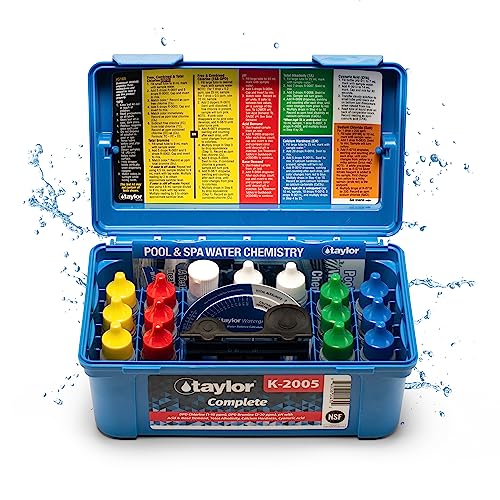
Taylor K-2005 High Range Test Kit
Wider-range drop kit for dialing in balance precisely.

Pool Mate Calcium Hardness Increaser, 25 lb
Raise low calcium to protect plaster and lift a corrosive LSI.
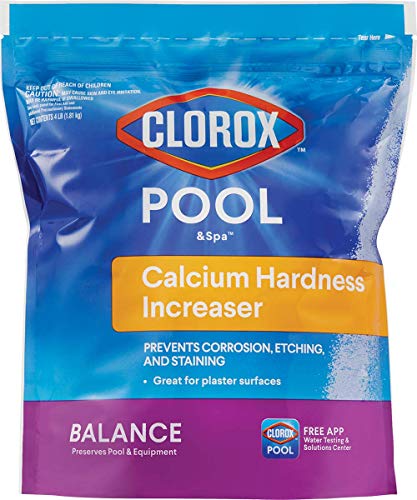
Clorox Pool&Spa Calcium Hardness Increaser
Prevents corrosive, etching water by raising calcium hardness.
What the index actually measures
Water wants to be saturated with calcium carbonate. If it is undersaturated, it goes looking for calcium to dissolve, pulling it out of plaster, grout, tile mortar, and concrete, and corroding metal along the way. If it is oversaturated, it dumps the excess as scale, leaving chalky deposits on surfaces, in pipes, and on heater elements and salt cells. The LSI puts a number on which way your water is leaning.
- LSI near 0: balanced. The water neither dissolves nor deposits calcium. This is the goal.
- LSI above +0.3: scale-forming. Expect cloudy water, calcium scale, and rough deposits over time.
- LSI below -0.3: corrosive. Expect plaster etching, dissolving grout, pitted metal, and shortened equipment life.
Note that the index says nothing about sanitation. A pool can be perfectly balanced on LSI and still be unsafe to swim in if free chlorine is low. LSI protects surfaces and gear, while chlorine protects swimmers. You manage both. For the sanitizer side, see pool water balance.
The five inputs
| Input | Typical target | Effect on LSI |
|---|---|---|
| pH | 7.2 to 7.8 | Strong and fast; the main daily lever |
| Total alkalinity (TA) | 60 to 120 ppm | Moderate; buffers pH and sets baseline |
| Calcium hardness (CH) | 200 to 400 ppm | Moderate; the calcium being balanced |
| Water temperature | Varies by season | Warmer pushes toward scaling |
| Total dissolved solids (TDS) | Low except salt pools | Small; higher in salt water |
Each factor nudges the index up or down. Raising pH, TA, CH, or temperature pushes LSI more positive (toward scaling). Lowering them pushes it more negative (toward corrosion). TDS has a smaller effect, but salt pools carry high TDS by design, which is one reason they need careful balancing.
pH does most of the work
Of the five, pH has the largest and quickest impact, which is why it sits at the top of every pool owner's daily checklist. Once you set calcium hardness and alkalinity to sensible baselines, controlling pH keeps your LSI in range day to day. Salt pools naturally drift toward high pH, so they need regular muriatic acid to stay balanced. Dial in the buffer with our pH and alkalinity calculator, and read the deeper background in total alkalinity and calcium hardness.
Why plaster and salt pools care most
Two types of pools have the most at stake with LSI:
- Plaster, pebble, and tile pools: these surfaces are made of calcium-bearing material. Corrosive water dissolves them, leaving etched, rough, and pitted finishes that are expensive to resurface. Balanced LSI is the cheapest insurance you can buy for a plaster pool.
- Saltwater pools: the salt cell is the costliest wear part. Scaling coats the cell plates and chokes off chlorine production, while corrosive water shortens cell life. High TDS from the salt also affects the index. Keeping LSI near zero protects both the pool surface and the generator. See saltwater pool chemistry for how cell care ties in.
Vinyl and fiberglass pools are more forgiving since they have no calcium surface to dissolve, but corrosive water can still attack metal fittings, ladders, and heater cores, so the index is not irrelevant for them either.
How to adjust your LSI
Once you have a reading, move it with deliberate, single changes:
- To raise a corrosive LSI: increase pH (aeration or soda ash), raise total alkalinity (baking soda), or raise calcium hardness (a calcium increaser). Low CH is a common cause of corrosive water, especially in soft fill-water regions.
- To lower a scaling LSI: reduce pH or alkalinity with muriatic acid, and dilute extremely high calcium by partially draining and refilling with softer water.
Change one factor, run the pump, retest, and recompute the index before making the next move. Because temperature is part of the equation, your balanced winter water can read differently in summer, so recheck seasonally and whenever you run a heater. Temperature's role is covered in pool water temperature and chemistry.
Safety basics
Balancing LSI means handling acid and dry chemicals, so respect the rules. Never mix pool chemicals, and never combine different chlorine types or chlorine and acid. Always add chemical to water, never water to chemical, and dose slowly with the pump running so it disperses. Retest before re-dosing, make small adjustments rather than large ones, and store acid and other chemicals separately in a cool, dry place away from children and pets. Any calculated figure is an estimate, so confirm with your own test.
The takeaway
Think of the Langelier Saturation Index as the health check for your pool's surfaces and equipment, separate from the chlorine that keeps swimmers safe. Set sensible baselines for calcium hardness and alkalinity, control pH daily, factor in temperature, and aim to keep the index near zero. For plaster and saltwater pools especially, that one habit prevents etching, scaling, and premature equipment failure, the costliest problems a pool owner faces.
Pool Care & Maintenance Planner
Water-test log, chemical dosing tracker, weekly maintenance schedule, and opening and closing checklists, in one printable planner that keeps your pool clear all season.
Frequently Asked Questions
What is the Langelier Saturation Index?
The Langelier Saturation Index (LSI) is a single number that tells you whether your water is balanced, scale-forming, or corrosive. It combines pH, temperature, calcium hardness, total alkalinity, and total dissolved solids into one value. A reading near zero means the water is in balance. Positive means it tends to deposit scale, negative means it tends to dissolve and corrode surfaces.
What is a good LSI value?
Aim to keep LSI between about -0.3 and +0.3, with zero as the ideal target. Inside that band the water is considered balanced and gentle on plaster, grout, metal, and equipment. Drift above +0.3 and you risk scale, calcium cloudiness, and stained surfaces. Drift below -0.3 and the water starts etching plaster, dissolving grout, and corroding metal.
Why does LSI matter for plaster and saltwater pools?
Plaster, grout, and concrete contain calcium, so corrosive (negative LSI) water literally dissolves them, causing etching and rough surfaces. Salt pools have an extra stake because corrosive water shortens salt cell life and aggressive scaling coats the cell plates and blocks chlorine production. Keeping LSI balanced protects both the surface and the most expensive part of a salt system.
Which factor changes LSI the most?
pH has the largest and fastest effect, which is why it tops the priority list. Temperature and total dissolved solids matter but change slowly. Calcium hardness and total alkalinity are the levers you adjust deliberately to set your baseline. In daily practice, controlling pH does most of the work of keeping LSI in range once your CH and TA are set correctly.
How do I raise or lower my LSI?
To raise a low (corrosive) LSI, increase pH, total alkalinity, or calcium hardness. To lower a high (scaling) LSI, reduce pH or alkalinity with acid, or dilute very high calcium by partially draining and refilling. Change one factor at a time, retest, and recheck the index. Small, measured adjustments are safer and easier to reverse than big swings.
Do I need to calculate LSI for every pool?
Vinyl and fiberglass pools are more forgiving because they contain no calcium surface to dissolve, though corrosive water can still harm metal parts and heaters. Plaster, pebble, tile, and especially saltwater pools benefit most from tracking LSI. If you have any of those, checking the index seasonally and after big chemistry changes is well worth the few minutes it takes.
Taking care of a pool?
Use our free calculators and guides to get every number right.
Pool Care Planner: $39