Best Pool Heaters (2026)
The best pool heaters for 2026: top gas heaters and heat pumps for inground and above-ground pools, plus how to size and choose between gas and electric.
A pool heater is what turns a three-month pool into a six-month pool. The right choice comes down to a single fork in the road: a gas heater for fast, on-demand heat in any weather, or a heat pump for low running costs over a long swim season. For 2026 our top gas pick is the Raypak 206K BTU natural gas heater for its quick warm-up and proven reliability, and our top electric pick is the AQUASTRONG 75,000 BTU inverter heat pump for its efficiency and quiet operation. Below are six heaters across both types, plus how to size one for your pool.
Best Pool Heaters for 2026

Raypak PR206A 206,000 BTU Natural Gas Heater
High-output gas heater for fast heat on larger inground pools and spas.

Raypak PR106 105,000 BTU Natural Gas Heater
Compact gas heater sized for above-ground pools and small spas.

Pentair MasterTemp 125K Natural Gas Heater
Quiet, efficient 125,000 BTU gas heater with digital controls.

Hayward Universal H-Series 250,000 BTU Gas Heater
Powerful 250K BTU gas heater for large inground pools and quick warm-ups.
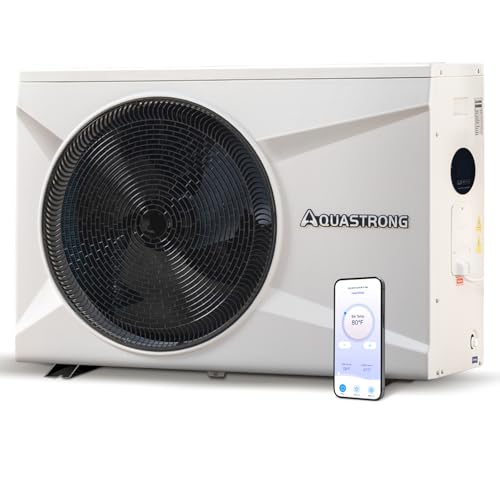
AQUASTRONG 75,000 BTU Inverter Pool Heat Pump
Variable-speed inverter heat pump up to 21,000 gallons with WiFi control.

WARMBLU H5 18,000 BTU Pool Heat Pump
Budget 110V heat pump for small above-ground pools up to 5,000 gallons.
Gas heaters vs heat pumps
The two technologies solve heat differently. A gas heater burns natural gas or propane to heat water directly, so it warms a pool quickly and works no matter how cold the air is. A heat pump uses electricity to move heat from the surrounding air into the water, which is far cheaper to run but slower, and it fades in cold weather. Match the type to how you actually swim.
| Factor | Gas heater | Heat pump |
|---|---|---|
| Heating speed | Fast, on demand | Slow, steady |
| Running cost | Higher per hour | Much lower per hour |
| Cold-weather performance | Works in any temperature | Best above about 50 degrees |
| Up-front cost | Moderate | Moderate to high |
| Best use | Spas, occasional or fast heating | Regular swimmers, season extension |
The picks in detail
Raypak 206K BTU: best gas heater
Raypak is one of the most widely installed names in residential pool heating, and the 206,000 BTU model hits a sweet spot for most inground pools. The intermittent spark ignition only fires the burner when there is a call for heat, and the design sheds residual heat quickly so it can be installed without bulky metal heat sinks. With digital controls and a strong BTU output, it warms a typical pool fast and handles a spa with ease. It is our overall gas pick for owners who want heat now, in any weather.
Raypak PR106 105K BTU: best for small pools
For an above-ground pool or a small inground pool, the 206K unit is more heater than you need. The 105,000 BTU PR106 delivers the same quick-heat gas advantage in a right-sized, lower-cost package rated for elevations up to nearly 5,000 feet. It is the practical gas choice when your pool is modest and you do not want to pay to run a large burner.
Pentair MasterTemp 125K: quiet and efficient
Pentair's MasterTemp line is known for quiet operation and a high efficiency rating, and the 125,000 BTU model suits small to mid-size pools. The digital display and easy controls make it approachable, and the compact footprint fits tight equipment pads. If low noise and a clean interface matter to you, it is a strong gas alternative.
Hayward Universal H-Series 250K: most powerful
When you have a large pool, a high temperature rise to cover, or want the fastest possible warm-up, the Hayward H-Series at 250,000 BTU brings the muscle. It is a universal-fit replacement that works with natural gas and integrates with pool automation. Expect a higher fuel draw to match the output, and confirm your gas supply can feed it before buying.
AQUASTRONG 75K inverter heat pump: best heat pump
This inverter heat pump is our top electric pick because it pairs strong output, rated up to 21,000 gallons, with full DC variable-frequency efficiency and quiet operation around 53 decibels. It both heats and cools, includes app and panel control with scheduling, and uses an auto-defrost cycle to keep working in cooler conditions. For an owner who swims regularly and wants the lowest running cost across a long season, it is the efficient long-game choice.
WARMBLU H5 18K BTU: best budget
If you have a small above-ground pool up to about 5,000 gallons and a standard 110V outlet, the WARMBLU H5 is an inexpensive way into heat-pump efficiency. It will not heat fast or perform in the cold like a large unit, but for nudging a small pool a few degrees warmer at low cost, it is a sensible entry point with WiFi control.
How we chose
These recommendations are based on research into heating technology, manufacturer BTU and efficiency specifications, and patterns across verified owner reviews, not on hands-on testing in our own pool. We focused on matching real swimming patterns to the right technology, so the list intentionally spans both gas and electric rather than crowning one type. Within each type we weighted output relative to typical pool sizes, efficiency and running cost, build reputation, and installation practicality, including gas-line and electrical requirements. We also flagged sizing, because an undersized heater never reaches temperature and an oversized one wastes money, which is the single most common heater mistake.
Size it before you buy
The most important number is not the brand, it is the BTU output your pool actually needs. That depends on your surface area, the temperature rise you want, and your wind and shade exposure. Measure your pool and run the numbers in our heater size calculator to get a target output, then choose a unit that meets or exceeds it. Whatever heater you pick, add a solar cover to hold the heat in overnight, since evaporation is the biggest source of heat loss and a cover is the cheapest way to cut your running cost. Confirm your gas supply or electrical panel can support the unit, and budget for professional installation to meet local code.
Pool Care & Maintenance Planner
Water-test log, chemical dosing tracker, weekly maintenance schedule, and opening and closing checklists, in one printable planner that keeps your pool clear all season.
Frequently Asked Questions
Gas heater or heat pump: which should I buy?
Choose a gas heater if you want fast heat on demand, heat a spa, or only warm the pool occasionally, since gas heats quickly regardless of air temperature. Choose a heat pump if you swim regularly and want lower running costs, because a heat pump moves heat from the air and can deliver three to five units of heat per unit of electricity. The trade-off is speed: heat pumps warm slowly and work best when the air stays above about 50 degrees.
What size pool heater do I need?
Heater sizing depends on your pool surface area, the temperature rise you want, wind exposure, and how fast you want to reach temperature. As a rough guide, gas heaters are rated by BTU and bigger pools need more BTU, while heat pumps are rated by BTU and COP. Rather than guess, measure your pool and run the numbers in our heater size calculator, then match the result to a unit with equal or greater output.
How much does it cost to run a pool heater?
Gas heaters cost more per hour to run but heat fast, so a quick warm-up before a swim can be efficient in total. Heat pumps cost far less per hour because they move heat rather than burn fuel, but they run longer. Your actual cost depends on local gas and electricity rates, your target temperature, and whether you use a solar cover to hold heat in. A cover is the single biggest money saver with any heater.
Can a heat pump heat my pool in cold weather?
Heat pumps work best when the outside air is roughly 50 degrees or warmer, and they lose efficiency as the air cools. They are excellent for extending the spring and fall season in most climates, but they are slow in genuinely cold weather and some shut down below a minimum air temperature. If you want reliable heat in winter or for a spa, a gas heater is the more dependable choice.
Do I need a professional to install a pool heater?
Usually yes, especially for gas heaters. Gas units require a correctly sized gas line, proper venting, and code-compliant connections, which is licensed work in most areas. Heat pumps need a dedicated electrical circuit and plumbing into your pad. Both should be installed to manufacturer specs and local code. Plan for professional installation cost on top of the unit price, and confirm your gas meter or electrical panel can support the load before buying.
Will a solar cover replace a heater?
Not entirely, but it dramatically improves any heater. A solar cover both adds daytime heat from the sun and, more importantly, blocks the evaporation that is the largest source of heat loss overnight. Many owners find a cover alone adds several degrees, and paired with a heater it cuts run time and cost significantly. Think of the cover as the partner to your heater, not a replacement.
Taking care of a pool?
Use our free calculators and guides to get every number right.
Pool Care Planner: $39