Why Pool Water Irritates Eyes
Stinging eyes in the pool are usually caused by chloramines (combined chlorine) and off-balance pH, not too much chlorine. Here is how to test, shock, and rebalance for water that feels gentle again.
If pool water makes eyes burn and red, the cause is almost never too much chlorine. It is usually chloramines, also called combined chlorine, plus a pH that has drifted out of the comfortable range. The fix is to test free and total chlorine, shock the pool to oxidize the chloramines, and correct pH to 7.2 to 7.6. Counterintuitively, the solution is often more chlorine through a proper shock, not less.
The myth of too much chlorine
The sharp chlorine smell and the sting that swimmers blame on heavy chlorine come from the opposite problem. When free chlorine reacts with sweat, sunscreen, body oils, and other organics, it forms chloramines. Those chloramines are weak sanitizers that produce the strong odor and irritate eyes, skin, and lungs. A pool with healthy free chlorine and combined chlorine near zero is gentle on the eyes, even at the top of the normal range.
Cause 1: Chloramines (combined chlorine)
Combined chlorine (CC) is the real irritant. You measure it indirectly: test free chlorine (FC) and total chlorine (TC), then CC equals TC minus FC. A healthy pool holds CC near zero. Once it climbs above about 0.5 ppm, chloramines are building up and irritation follows. For a deeper explanation of how these numbers relate, read free versus combined chlorine.
Cause 2: pH out of range
Even with perfect chlorine, water that is too acidic or too alkaline stings. Your tears sit around pH 7.4, so pool water in the 7.2 to 7.6 range feels closest to neutral. When pH drifts high or low, eyes and skin react regardless of chlorine. This is why some pools irritate swimmers even when the chlorine reading looks fine.
How to diagnose the irritation
- Test FC and TC. Subtract to get combined chlorine. If CC is above roughly 0.5 ppm, chloramines are your culprit.
- Test pH. Anything outside 7.2 to 7.6 can irritate on its own.
- Check free chlorine. Low FC means chloramines will keep forming, so confirm FC is in range for your CYA.
Test and fix irritating water
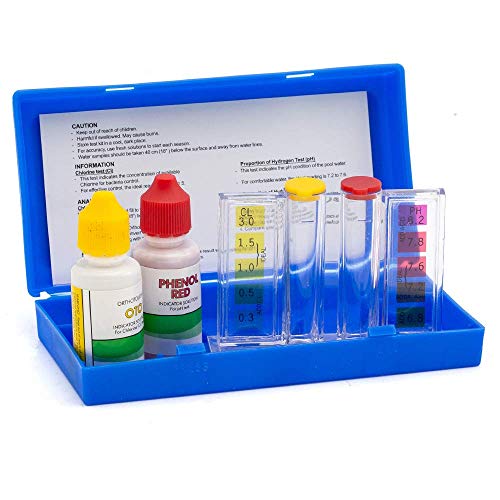
WWD POOL 2-Way Pool Test Kit (Chlorine + pH)
$12.99 on Amazon
Read chlorine and pH quickly to spot chloramines and off pH.
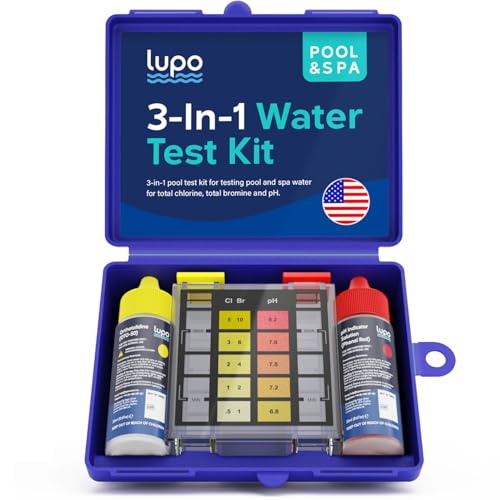
Lupo 3-in-1 Pool Test Kit (Chlorine, Bromine, pH)
$16.99 on Amazon
Backup comparator for confirming total and free chlorine.

In The Swim Cal-Hypo Pool Shock (68%, 12 x 1 lb)
$49.99 on Amazon
Strong shock to break past chloramines and reset combined chlorine.

CPDI Liquid Chlorine (12.5%, 4 Gallons)
$49.99 on Amazon
No-residue option to shock and raise free chlorine quickly.
The fix: shock, then balance pH
Shock to clear chloramines
To remove chloramines you have to reach breakpoint chlorination, the point where added chlorine destroys combined chlorine rather than just adding to it. That means raising free chlorine well above CC, which a proper shock does. Use the shock calculator to size the dose for your pool volume and CYA, run the pump, and retest. Combined chlorine should fall back to near zero.
Correct the pH
With chloramines handled, dial pH into 7.2 to 7.6. Add muriatic acid to lower it or soda ash to raise it, using the pH and alkalinity calculator for the right amount. Keep total alkalinity at 60 to 120 ppm so pH stays stable instead of bouncing.
Safety first. Never mix pool chemicals, and never combine different chlorine types or chlorine and acid. Always add chemical to water, never water to chemical. Pre-dissolve or broadcast per the label, run the pump while dosing, and retest before re-dosing. Wait until free chlorine settles back to the normal range and pH is balanced before anyone swims. Store chemicals separately and away from kids and pets.
What the readings should be
| Measure | Comfortable range |
|---|---|
| Combined chlorine (CC) | Near 0, shock if above ~0.5 ppm |
| pH | 7.2 to 7.6 |
| Total alkalinity | 60 to 120 ppm |
| Free chlorine | In range for your CYA |
How to prevent stinging eyes
- Keep free chlorine in range daily so chloramines never accumulate.
- Hold pH at 7.2 to 7.6 and alkalinity at 60 to 120 ppm.
- Shock after heavy bather loads, parties, and hot stretches to burn off combined chlorine.
- Ask swimmers to rinse off sunscreen and oils before getting in, which cuts the chloramine load.
- Run the pump for at least one full turnover each day.
- Test combined chlorine weekly, not just free chlorine, so you catch the problem early.
Gentle water comes from active chlorine and steady pH, not from cutting chlorine back. Test combined chlorine, shock when it climbs, and keep pH near 7.4. For the numbers behind every step, lean on the shock calculator, the pH and alkalinity calculator, and our guide to free versus combined chlorine.
Pool Care & Maintenance Planner
Water-test log, chemical dosing tracker, weekly maintenance schedule, and opening and closing checklists, in one printable planner that keeps your pool clear all season.
Frequently Asked Questions
Does too much chlorine make your eyes burn?
Usually not. The burning swimmers blame on too much chlorine is almost always caused by chloramines, which form when chlorine combines with sweat, sunscreen, and body oils, plus pH that has drifted away from the comfortable range. A pool with healthy free chlorine and balanced pH does not sting. The real culprit is spent chlorine, not an excess of fresh chlorine.
What are chloramines in a pool?
Chloramines, measured as combined chlorine (CC), are the byproduct of chlorine reacting with contaminants like sweat, urine, and oils. They are weak sanitizers, they cause the strong chlorine smell, and they irritate eyes, skin, and lungs. A healthy pool keeps CC near zero. When CC climbs above about 0.5 ppm, it is time to shock and burn it off.
How do I test for combined chlorine?
Use a kit that reads both free chlorine (FC) and total chlorine (TC). Combined chlorine is the difference: CC equals TC minus FC. A drop-based or DPD kit handles this well. If CC is above roughly 0.5 ppm, chloramines are present and likely causing the irritation, which calls for breakpoint shocking.
What pH should pool water be to avoid eye irritation?
Aim for 7.2 to 7.6, close to the natural pH of your tears at about 7.4. Water that drifts too acidic or too alkaline irritates eyes and skin on its own, separate from any chloramine issue. If swimmers complain even when chlorine looks fine, test and correct pH first, then retest. Our pH and alkalinity calculator sizes the dose.
Will shocking the pool stop the burning?
Often yes. Shocking to the breakpoint level oxidizes chloramines and resets combined chlorine to near zero, which removes the main source of stinging eyes and chlorine smell. Pair the shock with a pH correction into the 7.2 to 7.6 range, run the filter, and retest before swimming. The water should feel noticeably gentler afterward.
Why does my pool smell strongly of chlorine but still irritate eyes?
That strong smell is not a sign of too much chlorine, it is the smell of chloramines, meaning your chlorine is used up fighting contaminants. The fix is counterintuitive: add more chlorine through a proper shock to break past the chloramines, not less. Once combined chlorine drops to near zero, the smell and the eye sting both fade.
Taking care of a pool?
Use our free calculators and guides to get every number right.
Pool Care Planner: $39