Pool Algae: Green, Mustard & Black
Identify and treat the three common pool algae types. Green clears with shock and filtering, mustard needs copper algaecide and cleanup, and black algae demands hard brushing and strong chlorine.
Pool algae comes in three main types, and the treatment differs for each. Green algae is the easiest and clears with shock and filtering, mustard (yellow) algae is stubborn and needs a copper algaecide plus cleanup of everything that touched the water, and black algae has deep roots that demand hard brushing with a stainless brush and strong chlorine. Identify the type first, because using the green-algae approach on black algae just wastes chemicals.
Why algae shows up at all
Algae spores constantly enter your pool on wind, rain, and swimsuits. They only bloom when free chlorine cannot suppress them, which usually traces back to chlorine running low, CYA being too high and weakening that chlorine, weak circulation, or a heavy organic load. Fix the underlying chemistry and algae has nowhere to grow.
Green algae: the common bloom
Green algae turns the whole pool dull green or coats walls in a slick film. It is the fastest-growing type and also the fastest to clear.
- Identify: cloudy green water or slippery green surfaces, often after a few days of low chlorine.
- Treat: shock to the level your CYA requires, brush the whole pool, and run the filter nonstop until clear.
- Tools: a standard wide pool brush and granular or liquid shock.
A full walkthrough lives in our guide to clearing a green pool, and the shock calculator sets the exact dose for your volume and CYA.
Mustard (yellow) algae: the persistent one
Mustard algae looks like sand, dirt, or pollen settled on walls and the floor, usually in shaded areas. It brushes away in a cloud but settles right back, which is the tell.
- Identify: dusty yellow or tan patches that wipe off easily but return, often clinging to shaded walls and steps.
- Treat: shock to the algae level for your CYA, brush thoroughly, then use a copper-based algaecide formulated for yellow algae. Re-treat as the label allows.
- Critical step: sanitize everything that touched the water. Floats, ladders, brushes, pool toys, and even swimsuits carry mustard algae and will reinfect the pool if not cleaned.
Tools for stubborn algae
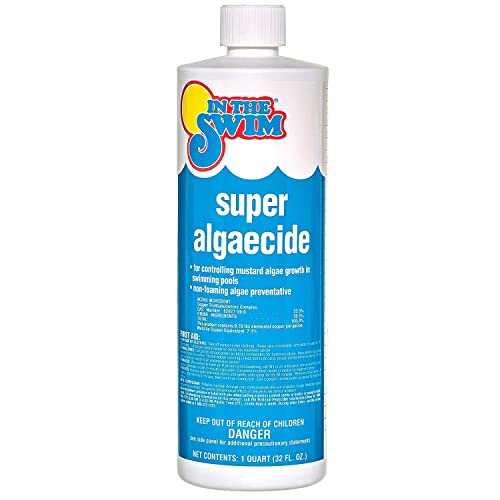
In The Swim Super Algaecide for Yellow/Mustard Algae
$19.99 on Amazon
Low-odor chelated copper algaecide aimed at persistent mustard algae.

Clorox Pool&Spa Algaecide and Clarifier (128 oz)
$14.88 on Amazon
Everyday algaecide to prevent and treat common green algae.

Poolmaster Stainless Steel Algae Detail Brush (5")
$11.17 on Amazon
Stiff stainless brush to scrub black algae spots and tight corners.

Sepetrel 17.5" Pool Brush Head
$16.19 on Amazon
Wide brush for sweeping algae off walls and floor across the pool.
Black algae: the rooted one
Black algae is the toughest. It forms dark blue-green spots, most common on plaster and grout in concrete pools, and grows protective layers plus deep roots that ordinary chlorine cannot reach.
- Identify: small, raised, blue-black spots that cling tightly and survive normal brushing. The center often has a hard protective head.
- Treat: brush each spot hard with a stainless steel brush to break the surface layer, apply chlorine directly to the spots, and shock the whole pool to a high level for its CYA.
- Stubborn spots: rubbing a chlorine tablet directly on a broken spot delivers concentrated chlorine to the roots. Vinyl liners need a softer touch, so use a nylon brush there to avoid damage.
- Repeat: black algae rarely dies in one pass. Re-brush and re-treat over several days until spots stop returning.
Safety first. Never mix pool chemicals, and never combine different chlorine types or chlorine and acid. Always add chemical to water, never water to chemical. Run the pump while dosing, retest before re-dosing, and store chemicals separately and away from kids and pets. Copper algaecides can stain if overdosed, so follow the label exactly. Use a stainless brush only on concrete or plaster, never on a vinyl liner.
Treatment at a glance
| Type | Looks like | Main fix |
|---|---|---|
| Green | Cloudy green water, slick film | Shock + brush + filter |
| Mustard (yellow) | Dusty sand-like patches in shade | Shock + copper algaecide + clean gear |
| Black | Rooted blue-black spots on plaster | Hard stainless brushing + direct chlorine + shock |
Preventing algae for good
- Hold free chlorine in range daily, scaled to your CYA.
- Keep CYA sensible (30 to 50 ppm for chlorine pools) so chlorine stays strong.
- Run the pump for at least one full turnover each day, more in heat.
- Brush walls, floor, and corners weekly and keep the filter clean.
- Add a maintenance algaecide during hot months as backup insurance.
- Rinse swimsuits, floats, and tools, since they carry spores between pools.
Algae is a chemistry problem first and a scrubbing problem second. Get free chlorine right for your stabilizer with the shock calculator, learn the method in how to shock a pool, and most blooms never start.
Pool Care & Maintenance Planner
Water-test log, chemical dosing tracker, weekly maintenance schedule, and opening and closing checklists, in one printable planner that keeps your pool clear all season.
Frequently Asked Questions
How do I tell green, mustard, and black algae apart?
Green algae floats and clouds the whole pool or coats surfaces in slick green. Mustard (yellow) algae looks like dusty sand or pollen on walls and floor, often in shade, and brushes away easily but returns. Black algae forms dark blue-green spots with deep roots that cling tightly to plaster and grout and resist brushing. The texture and location usually give it away.
What kills black algae in a pool?
Black algae needs aggressive mechanical and chemical attack. Brush each spot hard with a stainless steel brush to break its protective layer, apply chlorine directly to the spots, and shock the pool to a high level for its CYA. A chlorine tablet rubbed on stubborn spots can help. Expect to repeat over several days, since the roots survive a single treatment.
Is mustard algae hard to get rid of?
Mustard algae is persistent because it resists normal chlorine levels and clings to shaded surfaces, equipment, and even swimsuits. Shock to the algae level for your CYA, brush thoroughly, and treat with a copper-based algaecide made for yellow algae. Clean or sanitize anything that touched the water, like floats, brushes, and suits, or it will reinfect the pool.
Will algaecide alone clear pool algae?
No. For an active bloom, chlorine does the killing and algaecide is a backup or preventive. Algaecide shines when added to balanced, clear water to stop algae from starting, or as support for stubborn mustard and black types. Relying on algaecide instead of reaching the correct shock level is why many algae problems linger for weeks.
Why does algae keep coming back?
Recurring algae almost always means free chlorine is dropping too low, often because CYA is too high and weakening the chlorine, or the pump runs too little to circulate. Dead spots, dirty filters, and phosphate-rich water also feed regrowth. Hold chlorine in range daily, keep CYA sensible, run the filter for a full turnover, and brush weekly to break the cycle.
Can I prevent algae without chemicals?
Not entirely, but good habits do most of the work. Consistent free chlorine, balanced pH, adequate pump runtime, weekly brushing, and a clean filter prevent the vast majority of blooms. A maintenance dose of algaecide is cheap insurance during hot months or after heavy use, but it supports good chemistry rather than replacing it.
Taking care of a pool?
Use our free calculators and guides to get every number right.
Pool Care Planner: $39